Why Choose Rochester?
Rochester appeals to people who want a mid-sized city with educational and medical strength. It has a lower profile than larger metros, yet it still offers arts, dining, and recreation.
Additionally, the city has a long history of research and industry. Because of that, it can attract professionals, students, and families alike.
Cost of Living
Rochester is often more affordable than many larger Northeastern cities. Housing costs can be more manageable, especially compared with downstate markets.
However, winter weather and heating costs should still be part of relocation planning. Property taxes also deserve close review.
Real Estate and Housing Market
Rochester offers city apartments, single-family homes, historic neighborhoods, and suburban communities in the surrounding area. Buyers can find a range of home styles and price points.
Meanwhile, older housing stock may require more maintenance review. Therefore, inspections and neighborhood research remain important.
Education
The Rochester City School District serves the city, while many suburban districts serve the wider region. Families should compare district boundaries and school offerings carefully.
Higher education is a major asset. The University of Rochester and Rochester Institute of Technology are two of the area’s best-known institutions.
Healthcare Facilities
Healthcare is one of Rochester’s strongest sectors. The city offers hospitals, specialty care, and research-driven medical services.
Additionally, the healthcare and university systems support both employment and long-term community stability.
Recreation and Leisure
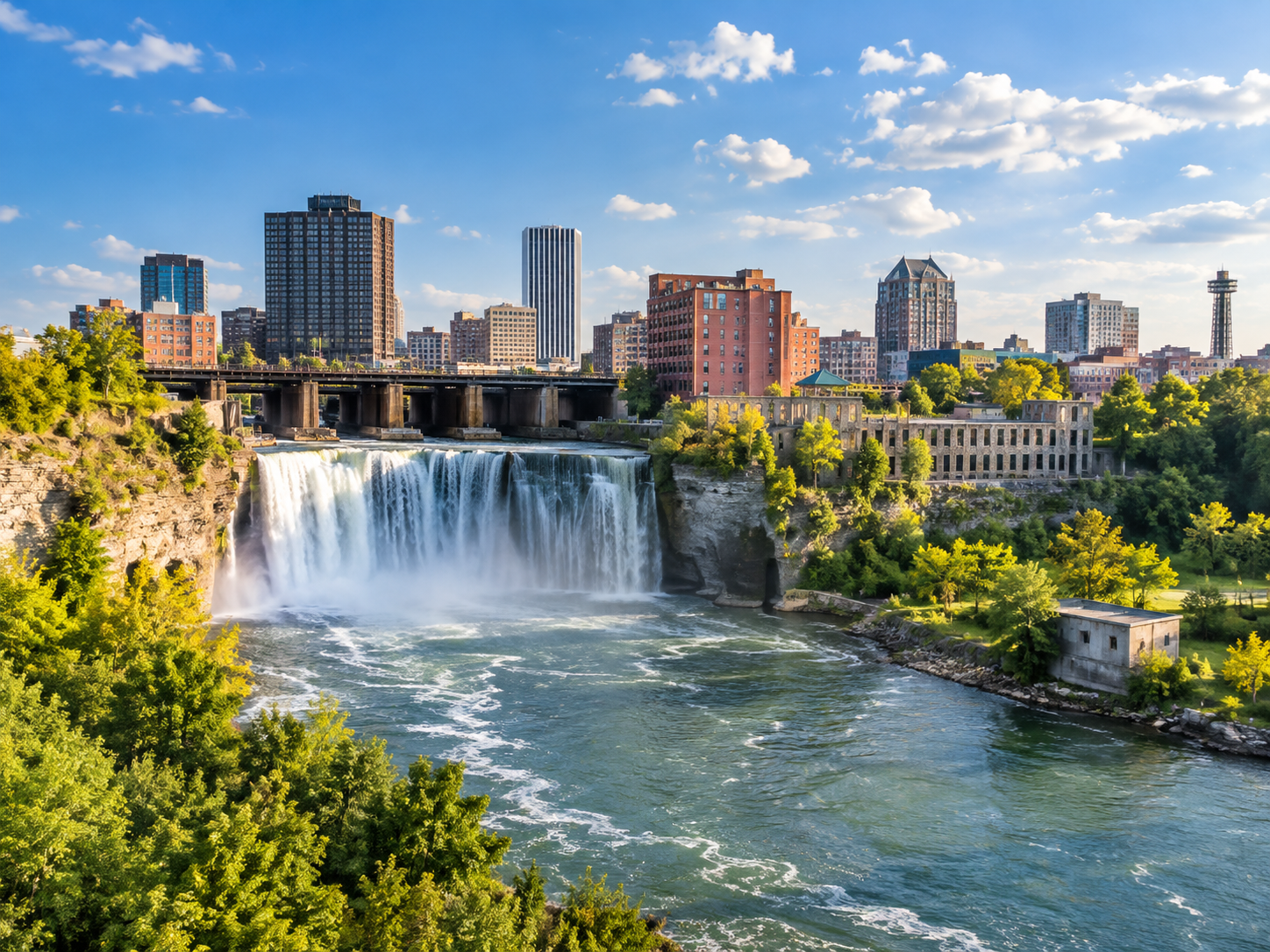
Rochester offers parks, riverfront areas, lake access, and seasonal recreation. Highland Park, Genesee River areas, and nearby Lake Ontario attractions add outdoor value.
The city also supports museums, theaters, and community arts programming. Because of that, residents can stay active in every season.
Dining and Shopping
Rochester’s dining scene includes local institutions, international options, breweries, and neighborhood restaurants. It balances casual daily choices with local flavor.
Shopping ranges from neighborhood districts to larger retail centers throughout the metro area.
Events and Festivals
Rochester hosts seasonal festivals, community events, concerts, and cultural celebrations. It is especially known for signature annual events tied to arts, music, and local heritage.
Additionally, the academic calendar helps support ongoing lectures, performances, and sports.
Transportation and Accessibility
Driving is common in Rochester, and many commutes are manageable compared with larger urban areas. Bus service provides another transportation option for some residents.
Meanwhile, the regional airport supports business and leisure travel.
Conclusion
Rochester can be a good fit for residents seeking affordability, education, healthcare access, and four-season living. It also offers a balanced city lifestyle without extreme scale.
Before relocating, compare neighborhoods, school districts, winter preparedness, and housing condition carefully.